


'/%3E%3Cpath%20fill='%23b2b2b2'%20d='M241%20382q0%2016%2017%2026%2017%2011%2042%2011t42-11q16-11%2017-26V269H241'/%3E%3Cpath%20fill='%239f7e00'%20d='M241%20379q0%2014%208%2023%209%209%2021%209%2014%200%2021-9%209-9%209-23V269h-59'/%3E%3Cpath%20d='M241%20339v-70h59v110q0%2014-9%2023l-6%205v-68h-15v72q-8%200-14-4v-68zm59%2040c0%2022%2015%2032%2029%2032%2021%200%2030-18%2030-32v-40h-59'/%3E%3Cpath%20fill='%239f7e00'%20d='M266%20277v5h2v12h-3v-5h2v-5h-9v5h2v5h-4v9h3v18h-5v10h34v-10h-5v-18h3v-9h-4v-5h2v-5h-9v5h2v5h-3v-12h2v-5zm42%20101q0%2010%206%2017%206%206%2015%207%2010-1%2016-7%206-7%206-17v-29h-43'/%3E%3Ccircle%20fill='%230044ad'%20cx='329.5'%20cy='372'%20r='6'/%3E%3Cellipse%20fill='%230044ad'%20cx='300'%20cy='340'%20rx='16'%20ry='21'/%3E%3C/svg%3E)

'/%3E%3C/svg%3E)
Industrial Conveyor Belts
Eliminate unexpected downtime with a conveyor belt featuring heavy-duty components!
Having a production plant with machinery working at record-breaking speeds is useless if your operators then have to rush to feed the machines or move packages by hand, slowing down the entire line. It is the paradox of automation: you invest thousands of euros in cutting-edge machinery, but then you pay someone to do the job of an industrial conveyor belt.
Practically, you invest in efficiency and then end up accepting waste. With an industrial material handling system, you eliminate bottlenecks and idle times.
The product travels smoothly from one workstation to another, without hitches, without accumulation, and without accidental drops that can damage the goods.
You maintain a constant pace throughout the entire shift, drastically reduce the risk of injuries related to manual handling, and, above all, you no longer have to stop the machines every half hour because the discharge area is congested.
Why consider an industrial conveyor belt for your business
Choosing the wrong industrial conveyor belt or delaying automation doesn’t just mean moving goods more slowly.
It means accepting that your margins erode in repetitive tasks and that your growth is stalled by invisible bottlenecks.
Here are the 5 challenges that are draining your value every day:
❌ 1. Stop delaying and turning down orders you cannot fulfill
❌ 1. Stop delaying and turning down orders you cannot fulfill
Adding personnel often only creates more chaos.
If your operators start getting in each other’s way and the workspace feels like it’s shrinking, you have reached the limit.
Your growth is stalled because your system still relies too heavily on manual labor rather than an infrastructure capable of evolving flexibly.
❌ 2. You cannot afford multi-thousand-euro machinery sitting idle, waiting
❌ 2. You cannot afford multi-thousand-euro machinery sitting idle, waiting
You have invested in state-of-the-art machinery, fast and precise, but the actual efficiency (KPI) is ridiculous if the part sits idle at the outfeed.
This mismatch is a bottleneck that burns through your investment every single minute.
Optimizing the connection between machines is the only way to unlock the value you have already purchased, and an industrial conveyor belt is the tool that can help you achieve your goal.
❌ 3. You are paying specialists to move boxes
❌ 3. You are paying specialists to move boxes
Every time one of your skilled workers is walking with a load in hand, your company is losing money.
You are draining precious margin on non-value-added activities.
A smart handling system is not an expense: it is the tool that frees up your team for tasks where their expertise truly makes a difference.
❌ 4. You are rejecting products because they suffer from damage and defects
❌ 4. You are rejecting products because they suffer from damage and defects
Preserving the quality of your products is the essential goal to protect your business.
When a product passes from hand to hand, there is a risk of contamination, degradation, and damage that can make it non-compliant with hygienic or quality standards.
Protect the quality of your brand and products, and avoid sanitary compliance issues with an inspection-ready handling system designed to reduce production waste.
❌ 5. You cannot risk a line stoppage due to a preventable injury
❌ 5. You cannot risk a line stoppage due to a preventable injury
Protecting your workers’ and operators’ backs is a conscious choice for those who want to avoid minor injuries that can decimate the workforce.
Every day of sick leave is a potential delay, as well as a cost, that impacts production capacity and makes the work complex for other team members.
With a conveyor belt, you can reduce unnecessary strain, making the work easier and avoiding risks for your company.
If your line stops or does not meet your goals, your entire business grinds to a halt.
With a conveyor system and the right conveyor belts, you can eliminate bottlenecks and speed up processes.
Do not let a slow process dictate your production capacity, giving away margin and growth opportunities to your competitors.
Find the most suitable solution for your production, in just one click!
How to turn an industrial conveyor belt into an ally that multiplies your production
Transforming production into a continuous flow is possible with the right handling system.
Choosing the right conveyor isn’t just about moving goods and raw materials; it means eliminating chaos, reducing maintenance stress, and breathing new life into your growth.
✅ 01. Boost your line’s output without adding more workers
✅ 01. Boost your line’s output without adding more workers
Paying staff just to move goods or raw materials is a foolish way to waste money.
Every hour your workers spend moving materials by hand or with forklifts is time you are paying for nothing.
With the right conveyor belt, a single worker can handle the workload of two or three people.
While the machinery handles the transport, the others can focus on different tasks, or you can simply save on payroll, reducing your overall costs.
Furthermore, the conveyor doesn’t stop and doesn’t get tired, providing continuity to your production exactly when you need it!
✅ 02. Move goods when and where they are needed
✅ 02. Move goods when and where they are needed
With an industrial conveyor belt, you move the material you need exactly where you need it and when you need it.
Unlike manual handling or forklifts, you avoid idle times and the chaos of internal material movement, making the line more efficient.
You turn every minute into actual revenue, loading containers quickly and allowing production lines to operate smoothly while eliminating empty runs and wasted time.
✅ 03. Protect your line from unforeseen disruptions with smart accumulation systems
✅ 03. Protect your line from unforeseen disruptions with smart accumulation systems
To keep operations running at all times, it is important to anticipate when a machine downstream shuts down.
With smart accumulation systems or buffers, it is possible to accumulate products so that the conveyor accommodates the goods and absorbs disruptions.
With careful design, you can avoid shutting down the entire plant while also handling sudden production peaks.
✅ 04. Preserve your product quality by avoiding damage
✅ 04. Preserve your product quality by avoiding damage
The less your products are handled, the lower the chances of damage or contamination before sale.
Furthermore, if you handle fragile items or electronic components, you can avoid shocks and jolts with constant speeds and controlled movements.
With the correct in-line conveyor belt, you standardize movement in a consistent and repeatable manner, avoiding the need to handle products with anomalies that are difficult to identify, manage, and improve.
✅ 05. You can schedule maintenance and have spare parts readily available
✅ 05. You can schedule maintenance and have spare parts readily available
If a worker suddenly leaves or falls ill, you cannot replace them easily and immediately; with a conveyor belt, however, you can schedule maintenance well in advance.
With smart spare parts management and preventive maintenance, you can reduce downtime and avoid last-minute miracles.
Let’s find together the industrial conveyor belt you need: choose the right model for your company!
Mechanical technology is a strategic asset required for continuous production where it is essential to protect continuity.
The right conveyor belt is the solution that allows you to accelerate growth.
Discover the features to evaluate:
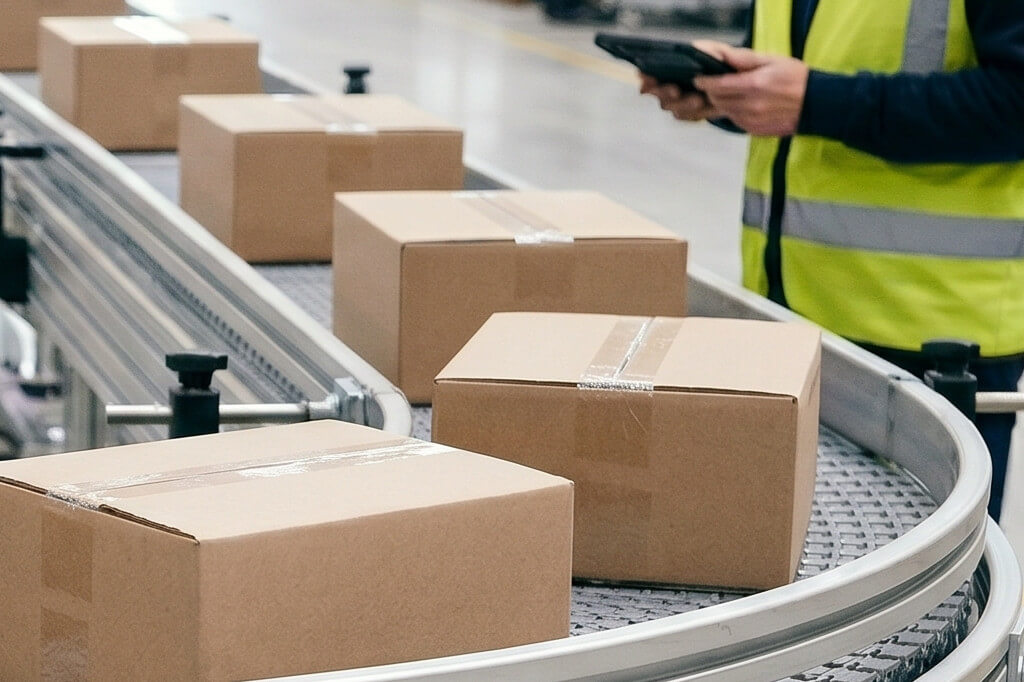
1. Modular design: the investment that evolves with your company
The market moves fast, the company evolves, and production and the warehouse must be able to adapt accordingly.
This is why evaluating a modular solution is essential, as the layout can be modified, extended, or shortened quickly and easily.
You avoid reinvesting in a brand-new system every time circumstances change radically, allowing you to adapt faster to change.
2. Energy efficiency: save on every meter transported
Do not underestimate energy costs, which can significantly impact your margin.
With high-efficiency motors, “Start & Stop” logic, and specific photocells, you can avoid running your conveyor empty and optimize energy consumption while it is operating.
Lower consumption means higher savings and less vulnerability to price fluctuations during energy crises.

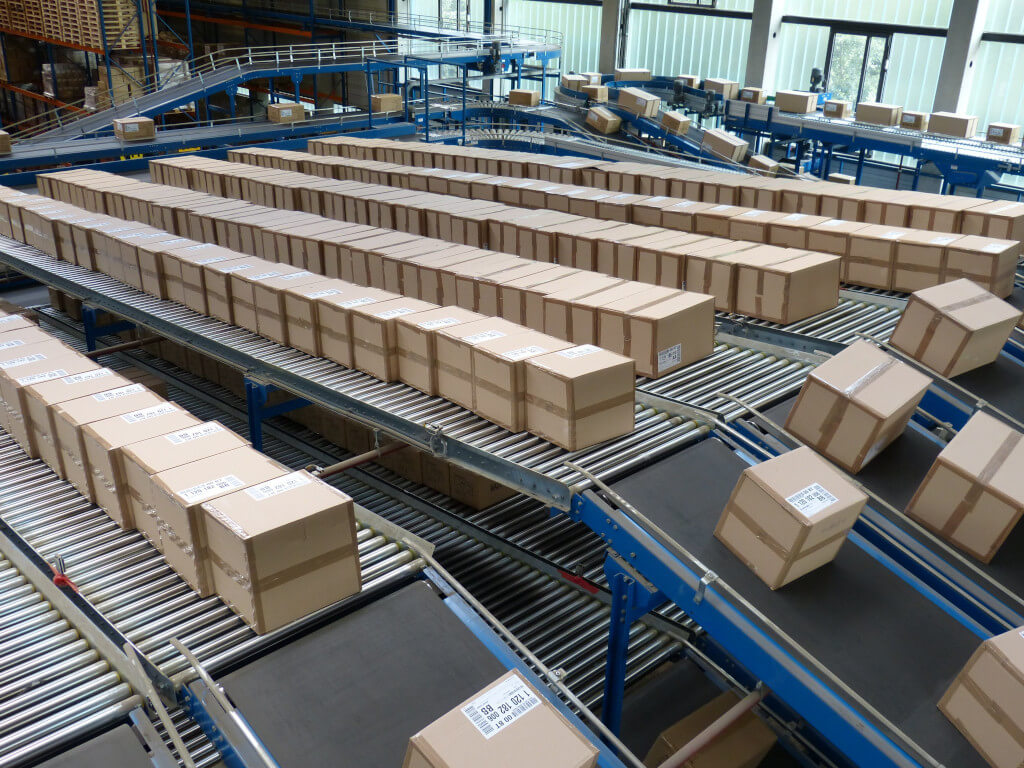
3. Quick maintenance: get back up and running before the problem becomes a cost
Every minute of downtime and stoppage is a major threat to your productivity.
This is why having accessible tensioning systems and easy-release systems allows you to carry out targeted, rapid, and simpler interventions.
When you have an emergency, dealing with a complex system means that under pressure, you risk causing more damage and therefore extending downtime.
4. Industry 4.0 compatibility: measure data even for material handling
With industrial evolution, it is essential to adapt to new technologies and be able to integrate with existing applications.
Even material and goods handling can generate a wealth of data and real-time KPIs that can interface with ERP or WMS systems through PLC programming.
With the right sensors, you can monitor performance in real time and address bottlenecks, eliminating wasted time.
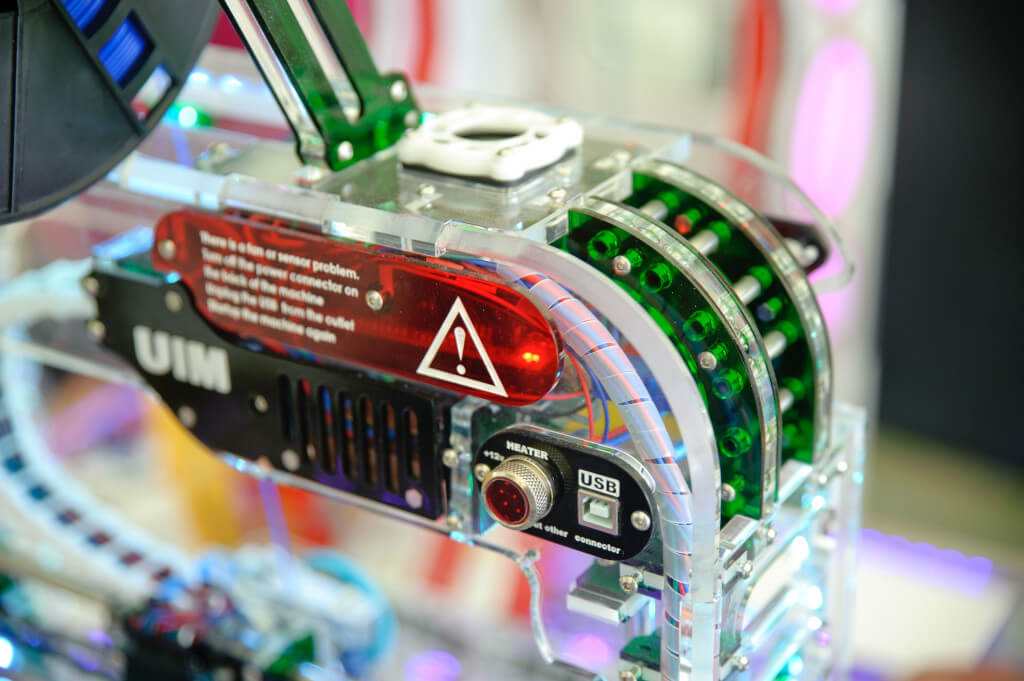
Criteria for finding the best industrial conveyor belt: How to find the most suitable one?
Selecting the correct industrial conveyor belt for your production line, industry type, and company requires evaluating many aspects and details; consequently, we have gathered the main doubts and questions to explore further.
When the investment becomes significant for your business, it is even more critical to ensure that the chosen machinery is the most suitable one to successfully increase and improve your production.
Below is a list to review and explore further to help you navigate the world of conveyors and find the one that is right for you:
- What is an industrial conveyor belt? Discover what kind of machinery it is here!
- What belt material should you choose? Discover the right belt for your needs here!
- Which material is best suited for the structure? Discover the right material for your company here!
- What are the differences of a modular industrial conveyor belt? Discover if it is right for you here!
- How to perform proper conveyor belt maintenance? Discover how to do it and its advantages here!
What is an industrial conveyor belt: How it has evolved over the years
The industrial conveyor belt is a machinery of mechanical origin that allows continuous transport for handling goods, finished products, or bulk materials from one specific point to another within a production or logistics process.
Over the years, it has undergone an evolutionary transformation, adapting to different eras; let us analyze its history together.
The first conveyor belts were born around 1795, and they were very far from our modern conception of conveyors. They were composed of wooden boards, leather, or canvas, and operated manually or via waterwheels, and they were mainly used in mills to move sacks of grain or flour.
In 1892, the American Thomas Robins designed a series of conveyor belts resistant to deterioration for transporting coal and minerals for the Thomas Edison Iron Ore Company. His innovative design for the time won first prize at the Paris World’s Fair in 1900, and that is how it began to be commercialized on a large scale.
In 1905, the British engineer Richard Sutcliffe designed a model for the Yorkshire coal mines, which was the first underground model and replaced carts pulled by horses or miners, increasing safety and productivity.
In 1913, the American Henry Ford was the one who introduced the conveyor belt inside the Highland Park plant to create the first assembly line. In fact, the first models of industrial conveyor belts truly came to life with the birth of the assembly line, which brought a reduction in assembly time from 12 hours to just 93 minutes.
From the post-war period to the present day, innovations emerged that led to the development of synthetic materials such as nylon, polyester, and plastic polymers; with the introduction of synthetic fabrics and steel cables inside the rubber, belts became capable of withstanding enormous loads and much longer routes.
In fact, today, the longest conveyor belt ever built, which is still in operation, is located in the Western Sahara at the phosphate deposits near Bou Craa and is about 100 km long.
Which material to choose for the industrial conveyor belt: Find the most suitable one for your needs
Selecting the right belt for an industrial conveyor belt means going into the details of your business and your needs to find the solution that best adapts to your production cycle.
In fact, the market has evolved, and specific materials, additional treatments, and different types of use are available that radically change the final result.
Let’s discover together the main alternatives available:
- PVC Belt: it is an economical material that can be used in many contexts, offering a certain degree of flexibility and good resistance to light abrasion. It is often used for logistics, parcel sorting, or generally for non-oily products. On the other hand, it is not suitable for high temperatures or for oily and greasy products;
- Polyurethane Belt: basically the standard for the food industry because it has high resistance to abrasion, cuts, oils, and greases. Furthermore, it is easy to clean and compliant with regulations;
- SBR Rubber Belt: this is the standard synthetic rubber that mimics the properties of natural rubber. It offers one of the best trade-offs between abrasion resistance and cost, and is primarily used in heavy industry. It works well with dry materials such as logs, wood chips, gravel, sand, crushed stone, and unlubricated metal loads. It should not be used with mineral oils and solvents, otherwise the belt absorbs them and degrades rapidly;
- NBR Rubber Belt: this is the specific oil-resistant rubber designed to withstand hydrocarbons and oils. Its main characteristic is resistance to swelling, which allows it to maintain its structural integrity. It is used for transporting lubricated mechanical components, fatty foods, or processes involving fat derivatives (with a specific version for the food industry). It is also used in environments where there is a risk of contact with hydraulic oils;
In addition to the main material, various factors come into play related to special material processing and treatments, their colors, and specific standards required for certain processes.
Which material to choose for the industrial conveyor belt structure: Find the most suitable solution for your industry
The structure of an industrial conveyor belt is also an important aspect that should not be underestimated, as it determines its durability, cost, compliance with any regulations, and also the extent of various maintenance operations.
The main alternatives available are:
- Aluminum: it is lightweight and ideal for light assembly lines, electronics, small packaging, or where quick layout reconfiguration is required;
- Stainless Steel: it is corrosion-resistant, has a smooth and non-porous surface, and is easy to sanitize. Consequently, it is frequently used in the food, chemical, and pharmaceutical sectors, or in humid environments and where frequent washdowns are performed;
- Painted/Galvanized Steel: it is robust, rigid, and economical. It is mainly used in logistics, warehouses, and heavy industrial manufacturing. It offers a valid cost-effectiveness ratio and is suitable for large-scale projects where the structure must support heavy loads over long distances;
In addition to the material, further aspects must also be considered, such as the need for curves, the length, the incline capability, and whether or not movement is required.
What is a modular industrial conveyor belt: What advantages it has compared to a traditional one
When discussing a modular industrial conveyor belt, we are dealing with a type of conveyor that evolves from a continuous belt to a conveying surface composed of a series of plastic modules (available in various solutions such as polypropylene, polyethylene, and acetal) interconnected with pins just like the links of a chain.
From this description, it is already easy to understand that the primary advantage in the event of a failure is that you only repair the broken module with minimal downtime; in contrast, with a traditional belt, it becomes necessary to replace it entirely, retension it, and re-splice it, resulting in extended downtime and requiring you to keep more spare materials in stock.
Furthermore, it offers additional advantages, such as greater versatility compared to traditional solutions.
In fact, with a modular conveyor, it is possible to design curves, inclines, or declines within a single conveyor body, whereas with the traditional solution this is not possible and requires dividing the lines into multiple separate machines.
In conclusion, the modular system is also easier to clean and wash thoroughly, allowing liquids to pass through if it is an open-grid solution. Moreover, it features a frictionless drive system which, unlike traditional systems where a wet or overloaded belt runs the risk of slippage, ensures reliable operation.
What is routine maintenance for an industrial conveyor belt: How to perform it and what advantages it brings
Performing proper maintenance on an industrial conveyor belt is one of the fundamental aspects of extending its lifespan over time and preventing critical issues.
The main maintenance tasks are categorized based on their maximum frequency, although these can obviously be reviewed depending on your specific situation by reducing the intervals or adapting them based on your production.
- Weekly maintenance:
- Cleaning operations: to remove dirt from the rollers and underneath the belt, as well as dust accumulation;
- Visual inspection: to identify any cuts, cracks, or worn areas on the belt;
- Tracking alignment check: ensuring the belt runs in the center of the machinery, as even slight misalignment runs the risk of fraying;
- Monthly and quarterly maintenance:
- Tension verification: this is an important operation to prevent the belt from running too loose or too tight, which leads to operational problems and possible failures;
- Rollers and drums check: it is advisable to periodically check that there are no jammed elements that could cause friction;
- Lubrication: ideally, grease the bearing supports (if they are not self-lubricating) and the drive components;
- Splice verification: check that the belt splice is intact and shows no signs of anomalies;
Furthermore, the more critical the machine downtime and the more conveyors you have on the line, the more advisable and priority it becomes to keep key spare parts in stock to quickly resolve unexpected breakdowns.